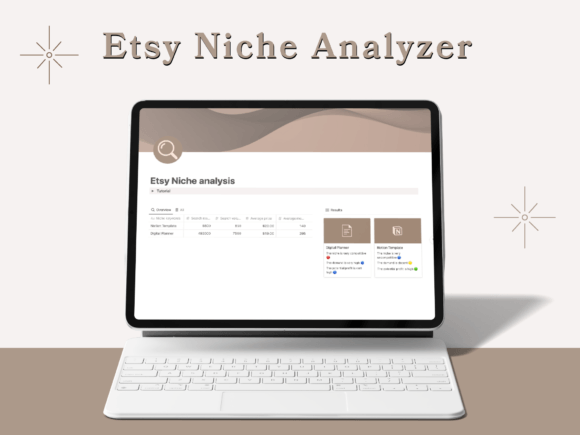
Decoding the Etsy Niche Analyzer: A Strategic Guide to Finding Profitable Products
In the expansive and ever-evolving marketplace of Etsy, success is rarely a result of luck. While creativity and craftsmanship are the foundations of any handmade or vintage business, visibility and sales are driven by data. For new sellers and seasoned entrepreneurs alike, the concept of an Etsy Niche Analyzer has become an indispensable tool in the modern e-commerce arsenal. But what exactly is it, and why does understanding this analytical approach matter more than ever in today’s digital landscape?
At its core, an Etsy Niche Analyzer is not just a piece of software; it is a strategic framework for identifying specific, underserved segments of the market where demand outstrips supply. It bridges the gap between artistic passion and commercial viability, ensuring that creators spend their time making products that people actually want to buy. This guide explores the purpose, significance, and practical application of niche analysis, helping you build a sustainable business grounded in informed decision-making.
Understanding the Fundamentals of Niche Analysis
To truly grasp the value of an Etsy Niche Analyzer, one must first understand what constitutes a "niche." Many beginners mistakenly believe a niche is simply a product category, such as "jewelry" or "home decor." However, these are broad markets saturated with millions of listings. A true niche is a specialized intersection of audience, problem, and solution.
For example, "leather wallets" is a market. "Minimalist RFID-blocking leather wallets for frequent travelers" is a niche. The analyzer helps you drill down from the former to the latter by evaluating three critical metrics:
- Search Volume: How many potential customers are actively typing specific phrases into the Etsy search bar?
- Competition Level: How many existing listings are fighting for those same keywords?
- Engagement Rate: Are shoppers clicking, favoriting, and buying when they find these results?
When these factors align favorably, you have identified a viable opportunity. The analyzer acts as a filter, removing guesswork and emotional bias from the product research phase. Instead of assuming a product will sell because you personally like it, you rely on empirical evidence of consumer behavior.
The Role of Data in Modern Creative Entrepreneurship
We live in an era where creativity and technology are deeply intertwined. The romanticized notion of the starving artist waiting for inspiration has been replaced by the savvy creative entrepreneur who uses data to fuel their art. An Etsy Niche Analyzer fits seamlessly into this modern workflow, serving as a compass in a crowded digital bazaar.
This shift is significant for several reasons. First, it lowers the barrier to entry. You no longer need decades of retail experience to spot trends; you need the ability to interpret data. Second, it reduces financial risk. By validating demand before investing in materials and production time, sellers can avoid the costly mistake of creating inventory that sits unsold. Finally, it enhances customer satisfaction. When you target a specific niche, your products solve specific problems, leading to happier customers and better reviews.
Consider the education sector within Etsy. Sellers of digital planners, homeschooling resources, or printable worksheets use niche analyzers to identify gaps in curriculum or organizational tools. They aren't just selling PDFs; they are selling solutions to overwhelmed parents and students. The analyzer reveals that while "math worksheets" is too competitive, "Montessori-aligned fraction worksheets for 3rd grade" has high intent and manageable competition. This precision transforms a generic download into a targeted educational resource.
Beyond the Tool: Developing Analytical Intuition
While software tools automate much of the heavy lifting, relying solely on algorithms can be a pitfall. A common misunderstanding is that the "perfect score" on an analyzer guarantees sales. Data tells you what happened in the past, but it cannot always predict future cultural shifts or account for product quality.
Effective niche analysis requires a human element. You must pair quantitative data with qualitative observation. If an analyzer shows high demand for "boho wedding decor," you must also look at the actual listings. Are the photos outdated? Is the pricing inconsistent? Are the descriptions poorly written? Sometimes, a niche looks statistically average but offers a massive opportunity because the current top sellers are underperforming in presentation or quality. Your unique value proposition often lies in the gap between what the data says exists and what the customer actually deserves.
Practical Applications Across Different Domains
The utility of niche analysis extends far beyond physical crafts. It is a versatile methodology applicable to various aspects of work, business, and daily life on the platform.
Physical Products and Handmade Goods
For makers, the analyzer informs material sourcing and design iterations. If you create ceramic mugs, analysis might reveal that "large capacity soup mugs with handles" are trending upward while standard coffee mugs are stagnant. This allows you to pivot your production schedule to meet emerging seasonal demands without abandoning your craft.
Digital Downloads and Passive Income
Digital sellers benefit immensely from long-tail keyword analysis. Since digital products have zero marginal cost of reproduction, testing multiple micro-niches is low-risk. An analyzer helps identify specific file types or formats (e.g., "Procreate brushes for watercolor lettering") that cater to professional users willing to pay premium prices, rather than competing in the race-to-the-bottom market of generic clipart.
Print-on-Demand (POD)
POD businesses thrive entirely on niche specificity. Because margins are thinner, volume and conversion rates are paramount. Analyzers help POD sellers cross-reference trending topics with apparel styles. For instance, combining a trending hobby like "pickleball" with a specific demographic identifier like "retired teacher" creates a hyper-targeted shirt design that resonates deeply with a buyer, drastically increasing conversion likelihood compared to a generic sports shirt.
Common Misconceptions and Pitfalls
As you integrate niche analysis into your business strategy, be wary of these frequent assumptions that can derail progress:
- The "Zero Competition" Myth: Many beginners search for niches with absolutely no competition. Usually, zero competition means zero demand. You want low or manageable competition, not a ghost town. Some competition validates that money is being spent in that space.
- Ignoring Seasonality: An analyzer might show massive search volume for "Christmas ornaments" in July, but if you launch then without understanding the seasonal curve, you may miss the peak buying window. Always analyze historical trends, not just current snapshots.
- Over-Optimizing for Robots: Stuffing titles with keywords found in an analyzer at the expense of readability hurts conversion. Humans buy products, not algorithms. Use data to inform your language, but write for people.
- Static Analysis: Niches are living ecosystems. What worked six months ago may be saturated today. Regular re-evaluation is necessary to stay relevant.
Building a Broader Understanding of Market Dynamics
Ultimately, mastering the Etsy Niche Analyzer is about developing a deeper empathy for the shopper. Every search query represents a person with a desire, a need, or a gift to give. When you analyze niches effectively, you are listening to the collective voice of the marketplace.
This skill translates beyond Etsy. The ability to identify underserved audiences, validate ideas through data, and iterate based on feedback is fundamental to marketing, product management, and content creation in the wider digital economy. Whether you are selling hand-poured candles, vintage clothing, or budget spreadsheets, the principles remain the same: find the intersection of what you can provide and what the world is asking for.
By approaching niche analysis as a continuous learning process rather than a one-time setup task, you position your shop for longevity. You move away from chasing fleeting fads and toward building a brand rooted in genuine market fit. In a platform defined by individuality, data doesn't stifle creativity—it provides the stage upon which your unique creations can finally be seen, appreciated, and purchased by the people who need them most.