Evaluating Honey Bees Clipart: Styles, Formats, and Practical Selection Criteria
Selecting the right visual assets for a project involving pollinators requires more than a simple image search. Honey bees clipart encompasses a vast spectrum of digital illustrations, ranging from scientifically accurate anatomical diagrams to stylized, cartoonish icons designed for children’s education. For designers, educators, and content creators aged 20 to 50, the challenge often lies not in finding an image, but in distinguishing between aesthetic styles, technical formats, and licensing terms that align with specific project goals. Understanding the nuances of this niche category ensures that the chosen imagery supports the intended message rather than distracting from it.
Distinguishing Aesthetic Categories and Visual Tone
The term "honey bees clipart" is functionally broad, covering several distinct artistic approaches. Recognizing these sub-categories is the first step in effective evaluation, as each serves a different communicative purpose.
Scientific and Botanical Illustration
This style prioritizes anatomical correctness and naturalistic color palettes. These assets often depict specific species, such as Apis mellifera, with accurate wing venation, leg segmentation, and pollen basket details. They are typically rendered in watercolor, stipple, or fine line art styles.
- Best Fit: Academic publications, nature journals, apiary business branding, and environmental conservation campaigns.
- Tradeoff: While highly credible, these images can appear too serious or dense for casual social media content or early childhood materials.
Flat Design and Iconography
Characterized by solid colors, minimal shading, and geometric simplification, flat design bee clipart focuses on immediate recognition over detail. These vectors are optimized for scalability and digital interfaces.
- Best Fit: Infographics, website UI elements, app icons, and modern marketing collateral.
- Tradeoff: Lacks emotional warmth and biological specificity; may feel generic if not customized.
Whimsical and Anthropomorphic
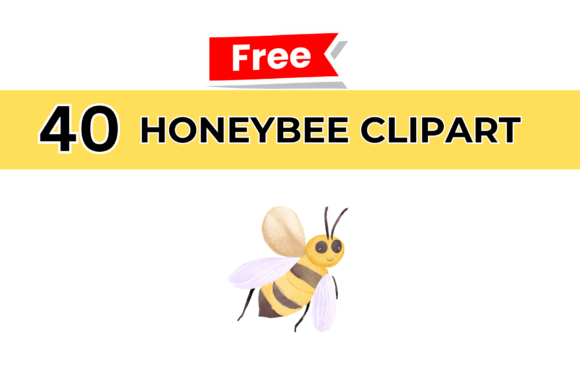
These illustrations feature bees with facial expressions, exaggerated proportions, or human-like behaviors. Often created in hand-drawn or digital painting styles, they evoke nostalgia and approachability.
- Best Fit: K-12 educational worksheets, party invitations, craft patterns, and lifestyle blogging.
- Tradeoff: Completely unsuitable for scientific or professional contexts where accuracy implies authority.
Technical Formats: Vector vs. Raster Considerations
When comparing honey bees clipart options, file format dictates long-term utility. Many users default to whatever is readily available, but understanding the technical distinction prevents future frustration regarding print quality and editability.
Vector Graphics (SVG, EPS, AI) are mathematically defined paths rather than pixel grids. For bee imagery, which frequently includes intricate details like wing transparency or hair texture, vectors offer superior flexibility. You can recolor a vector bee to match a brand palette instantly or resize it from a business card to a billboard without degradation. If your project involves multiple touchpoints or requires color customization, prioritizing vector-based honey bees clipart is usually the most efficient choice.
Raster Images (PNG, JPG) remain relevant for specific use cases. High-resolution PNGs with transparent backgrounds are ideal for quick placement in documents or presentations where editing is unnecessary. Watercolor-style bee clipart is almost exclusively raster-based because the medium’s organic bleeding cannot be perfectly replicated in vector paths. However, buyers must verify resolution; a 72 DPI web graphic will appear pixelated when printed at 300 DPI for physical products.
Licensing and Commercial Viability
A critical decision factor often overlooked during the selection process is usage rights. The market for honey bees clipart is segmented into three primary licensing tiers, each with distinct implications for commercial projects.
- Personal Use Only: Free or low-cost assets restricted to non-commercial projects. Using these for a product label, monetized blog, or client deliverable constitutes copyright infringement.
- Commercial License: Permits use in end products sold to clients or consumers. Terms vary significantly; some licenses cap the number of units sold (e.g., up to 500 prints), while others offer unlimited reproduction.
- Extended/POD License: Specifically required for Print-on-Demand services where the clipart is the primary value of the product. Standard commercial licenses rarely cover this use case.
For professionals evaluating resources, always review the specific license agreement rather than assuming coverage based on price. A $5 asset with restrictive terms may ultimately cost more than a $25 asset with comprehensive commercial rights if you need to upgrade later or face legal complications.
Comparing Clipart Against Alternative Visual Solutions
Honey bees clipart is not universally the optimal solution. Evaluating it against alternatives helps determine whether pre-made assets or other approaches better serve your objectives.
Clipart vs. Stock Photography
Photography provides realism and context that illustration cannot replicate. If the goal is to showcase actual hive conditions, pollination in action, or the texture of honeycomb, photography is superior. However, photos carry inherent limitations: fixed composition, background removal difficulties, and inconsistent lighting across a series. Clipart offers uniformity and isolation that photography struggles to achieve, making it preferable for diagrams, repetitive design elements, or branded consistency.
Clipart vs. Custom Illustration
Commissioning original artwork guarantees uniqueness and perfect alignment with project specifications. The tradeoff is cost and timeline. Custom illustrations typically range from $100 to $500+ per piece with multi-day turnaround times. Pre-made honey bees clipart serves as a viable middle ground when budget constraints exist but stock photography feels inappropriate. Many premium clipart sets now include editable source files, allowing partial customization without full commission costs.
Clipart vs. AI-Generated Imagery
AI tools can generate bee imagery rapidly, but current models struggle with biological accuracy. Wing counts, leg anatomy, and stripe patterns are frequently incorrect, which undermines credibility in educational or professional contexts. Additionally, AI-generated images currently occupy a legal gray area regarding copyright ownership and commercial protection. Traditional clipart created by human artists provides verifiable licensing and anatomical reliability that AI cannot yet guarantee.
Decision Framework: When to Choose Honey Bees Clipart
Synthesizing the above factors, honey bees clipart represents the strongest option when specific conditions align. Use this framework to validate your selection:
- Choose Clipart When: You need consistent visual language across multiple assets, require transparent/isolated subjects for layered designs, work within moderate budgets, or target audiences that respond better to illustration than photography (children, craft communities, lifestyle brands).
- Seek Alternatives When: Scientific precision is non-negotiable and no existing clipart meets standards (custom illustration), real-world context drives the narrative (photography), or you require exclusive rights preventing others from using identical imagery (commission or buyout).
Evaluating Quality Beyond Aesthetics
Professional evaluation extends beyond surface appearance. When reviewing potential honey bees clipart assets, examine these technical indicators of quality:
- Path Cleanliness: In vector files, excessive anchor points create bloated file sizes and jagged curves. Well-crafted clipart uses minimal nodes while maintaining smooth contours.
- Layer Organization: Editable files should have logically named layers (wings, body, legs separated). Merged layers severely limit customization potential.
- Color Mode Consistency: Ensure CMYK versions exist for print projects. RGB-only clipart may shift unexpectedly when converted for physical production.
- Metadata Completeness: Professional assets include creator attribution, license summaries, and keyword tags embedded in the file, streamlining compliance and asset management.
Making informed decisions about honey bees clipart requires balancing aesthetic preferences with practical constraints. By systematically evaluating style categories, technical specifications, licensing terms, and alternative solutions, you can select resources that enhance rather than compromise your project’s integrity. The most effective choice is rarely the most visually striking option in isolation, but rather the asset whose characteristics align most precisely with your specific functional requirements and audience expectations.